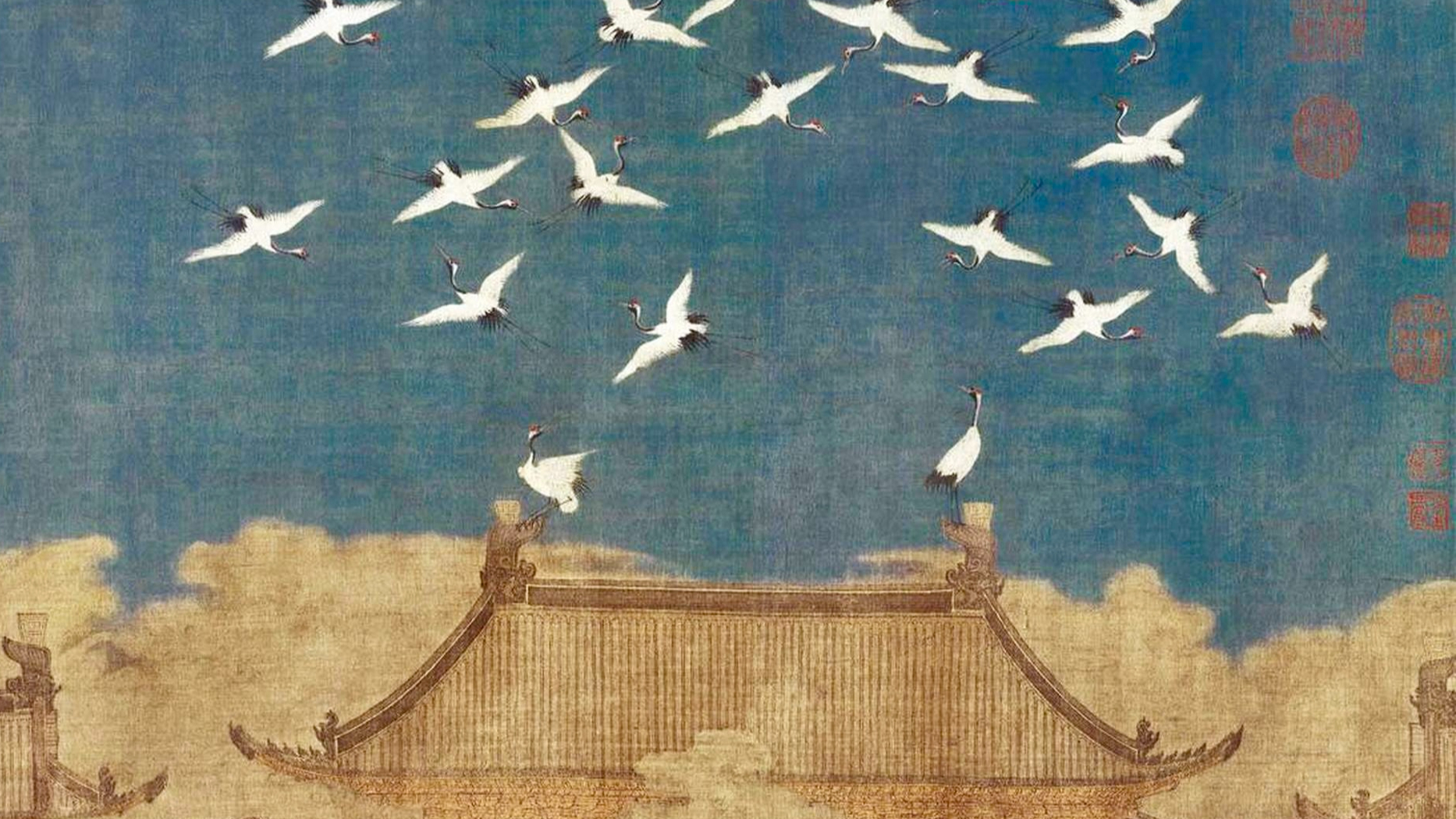
Auspicious Cranes
Introduction
Auspicious Cranes (Rui He Tu) is a celebrated painting by Zhao Ji, Emperor Huizong of the Song Dynasty, known for its intricate depiction and cultural significance. As a masterpiece of traditional Chinese art, it is emblematic of the aesthetic values and technical mastery of the Song Dynasty, a period renowned for its artistic achievements. The painting is not only a reflection of the era's artistic preferences but also a representation of the unique style and sophistication associated with Emperor Huizong's reign. Its depiction of cranes, symbols of longevity and good fortune in Chinese culture, imbues the artwork with layers of symbolism and meaning.
Historical Background
The Song Dynasty was a pivotal era in Chinese history, distinguished by a flourishing of culture, art, and philosophy. During this time, art reached unprecedented heights, characterized by elegance, simplicity, and an emphasis on subtler details. Emperor Huizong was not only a political leader but also an accomplished artist and patron of the arts. His contributions to the development of Chinese painting were profound, and he cultivated a court where art and literature thrived. "Auspicious Cranes" was created during this vibrant cultural milieu, reflecting both the artistic and political aspirations of the era. The painting is celebrated not only for its aesthetic beauty but also for the manner in which it encapsulates the philosophical and cultural ideals of the Song Dynasty.
Artistic Description
Auspicious Cranes is distinguished by its meticulous brushwork and harmonious composition, which are hallmarks of Song Dynasty painting. The artwork depicts a group of cranes, elegantly poised against a backdrop of natural scenery, embodying the grace and purity often associated with these birds. The cranes are depicted in a variety of stances, showcasing Emperor Huizong's keen observation of nature and his ability to convey movement and vitality through his brushwork. The use of color is subtle yet effective, with mineral pigments that enhance the visual impact without overwhelming the viewer. This careful balance of form, color, and composition illustrates the sophisticated artistic techniques that were developed during the Song Dynasty under Emperor Huizong's guidance.
Significance
The significance of Auspicious Cranes extends beyond its artistic value; it is a cultural artifact that encapsulates the philosophical and ideological currents of its time. In Chinese culture, cranes are revered as symbols of longevity, immortality, and auspiciousness, qualities that are highly valued in traditional Chinese society. The painting is often interpreted as an expression of the emperor's aspirations for a prosperous and harmonious reign, and it reflects the broader cultural emphasis on harmony with nature and the universe. Moreover, the work is a testament to the Song Dynasty's advancements in artistic techniques and its role in shaping the trajectory of Chinese art. It serves as an enduring reminder of the rich cultural heritage of China and the timeless beauty of its traditional art forms.
Interpretation and Symbolism
The depiction of cranes in flight or perched elegantly within the artwork conveys a sense of grace and tranquility, aligning with the Confucian ideals of harmony and balance. The composition of the painting, with its careful attention to detail and proportion, further emphasizes these themes, inviting viewers to contemplate the interconnectedness of humanity and nature. Emperor Huizong's choice to feature cranes in this work is indicative of his desire to convey messages of hope and prosperity to his subjects, and it underscores the painting's role as both a personal expression and a public statement.
Preservation and Display
Preservation of Auspicious Cranes has been an ongoing endeavor, reflecting the challenges of maintaining ancient artworks. The painting, created with delicate mineral pigments, requires careful handling to prevent deterioration over time. Efforts to preserve such works often involve limiting their exposure to light and air, as these elements can cause fading and damage to the pigments. The use of modern technology, including digital imaging and 3D printing, has played a crucial role in preserving the artwork's legacy by enabling high-resolution reproductions that can be displayed without risking damage to the original. These technological advancements have not only facilitated the artwork's preservation but have also made it more accessible to a global audience, allowing for greater appreciation and understanding of its cultural significance.
Cultural Impact
The cultural impact of Auspicious Cranes is profound, as it continues to inspire artists, scholars, and cultural enthusiasts both within China and internationally. Its themes of harmony and longevity resonate with contemporary audiences, highlighting the enduring relevance of traditional Chinese cultural values. Moreover, the painting's role in exhibitions, such as those at the Palace Museum and the National Museum of China, underscores its significance as a cultural touchstone that bridges historical and modern contexts. Through scholarly research, digital reproduction, and public display, Auspicious Cranes remains a vital part of China's artistic heritage, continuing to captivate and inspire those who encounter it.








